
Polish architecture in Râmnicu Vâlcea

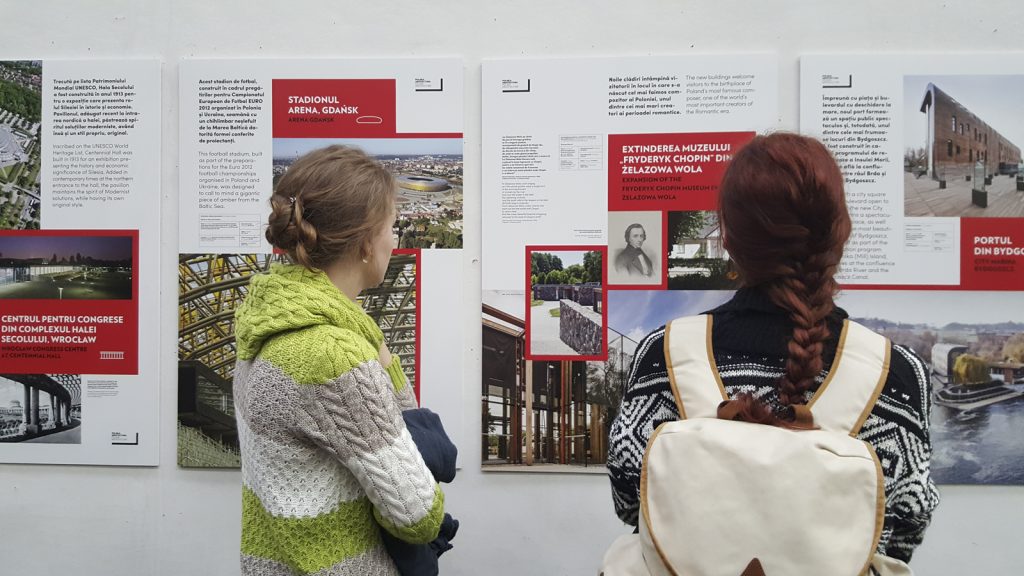
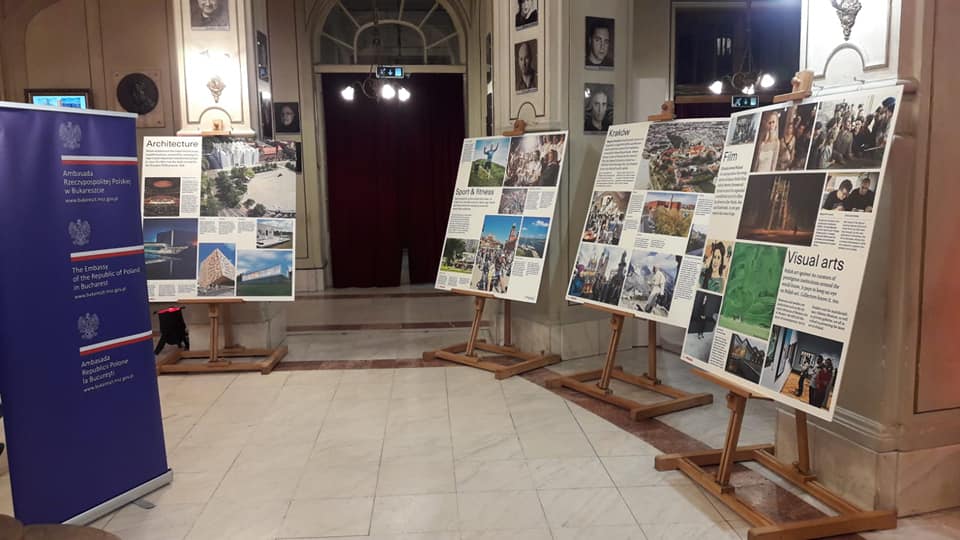
The exhibition presents 20 new buildings or recently revitalized illustrated by the best polish architectural photographers. Seen through their eyes, objects reveal their unique shape and the complex way they were designed. The exhibition also includes sketches, drawings and photoreports that present the constructions in the context of important historicals events for Poland, also remembering the activities carried out by the personalities to which they were dedicated. Such a thematic approach allows visitors to the exhibition to get a better knowledge of today's poles.

Each of the objects presented is a separate chapter in the history of modern architecture in Poland. Thus, going through the exhibition, you can see inside the European Solidarity Center in Gdańsk, dedicated to the legendary social movement "Solidarity", whose actions caused the fall of communism in Poland and Eastern Europe. The Center received this year's Museum Award from the Council of Europe. Visitors will definitely pay attention to the atypical construction of the "Mieczysław Karłowicz" Philharmonic from Szczecin, one of the best known and most beautiful concert halls in Europe, which in 2015 received the prestigious Mies van der Rohe Award from the European Union. Shakespeare Theater from Gdansk, with its unique interior, or the amber-shaped stadium will remain also in the public's memory. The same will happen with the other buildings of the 20 presented in the exhibition.

The exhibition "Poland. Architecture "was made in collaboration between the Polish Ministry of Foreign Affairs and the monthly magazine "Architektura" – Murator ", and the curator is Ewa Porebski, editor-chief of the mentioned magazine.

This exhibition is organized by the Polish Cultural Institute and the County Library "Antim Ivireanul" Vâlcea and can be visited at the library premises, Street Carol I. 26 in Râmnicu Vâlcea, between 27 January -15 March 2020, Monday to Saturday, during library operating hours.

Alpin Film Festival in Braşov

Alpin Film Festival is an event dedicated to mountain culture and education and will take place between 24 February – 1 March 2020 in Brașov, Bușteni and Predeal. The first man in history that have conquered Everest in winter, legendary polish climber Krzysztof Wielicki, distinguished in 2019 with the Piolet d 'Gold Career Award, is the guest of honor for the 5th edition of the Alpin Film Festival. On 26 February, after the screening of the documentary "The Last Mountain" considered the best mountain film of the year 2019, the public will have the opportunity to meet him in Brașov , within a special event hosted by the Reduta Cultural Center, with the support of the Polish Institute in Bucharest.

Emblematic figure of the golden age of polish mountaineers, in 1980, Krzysztof Wielicki get into history, by conquering Everest in winter, with Leszek Cichy. No one had achieved such a performance before, as no one can match , even to this day, the polish climbers known as ,,the ice warriors '' of the group to which Wielicki belongs.

Their expedition to K2, one of the last eight-thousanders that had never been conquered in winter until 2018, is the subject of the documentary The Last Mountain, directed by Dariusz Załuski. The film is a recording of an ascent under extreme conditions, marked by long days spent at the base camp and discussions and debates between climbers. Also, shows the spectacular rescue operation of Élisabeth Revol, which was blocked near the top of Nanga Parbat along with Tomasz Mackiewicz.

After the film screening, scheduled on 26 February, from 19:30, Reduta Cultural Center, Krzysztof Wielicki will reveal to the public details of the most important group expeditions, but also about his solo successes and the following achievements he plans to do in the coming years .

Access to the event is free of charge , within the available seats: http://bit.ly/AscensiuneaEverestului .

The complete program of the 5th edition of the Alpin Film Festival: https://alpinfilmfestival.ro/ .

Transfer of authority between the polish contingents at Craiova

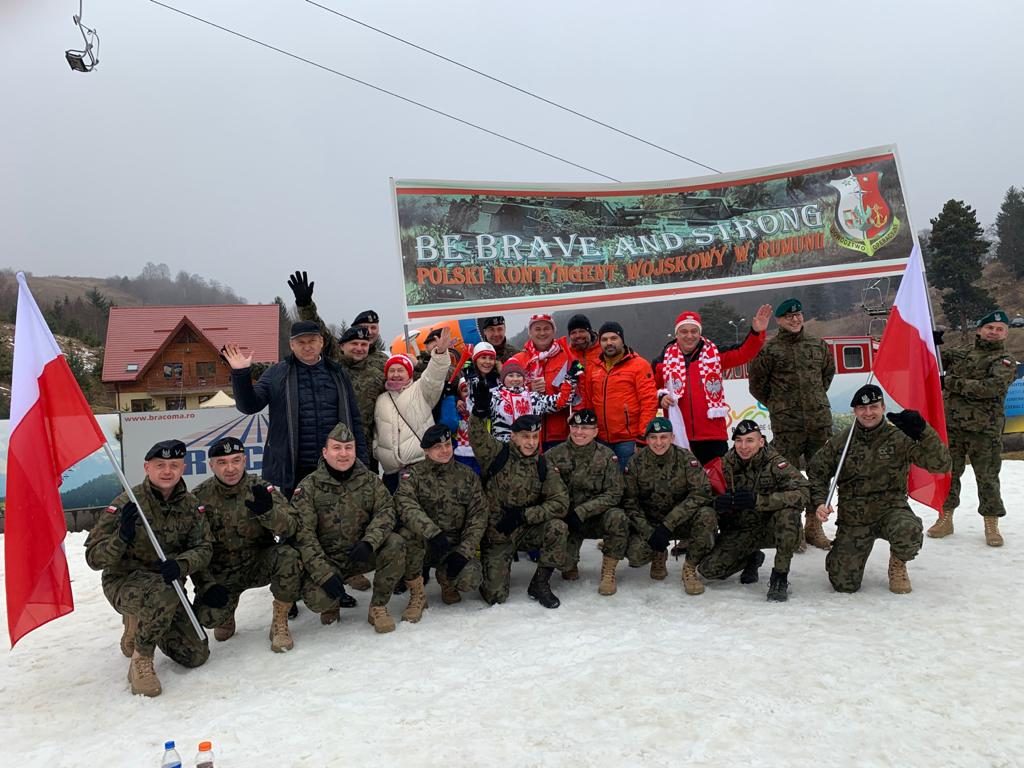
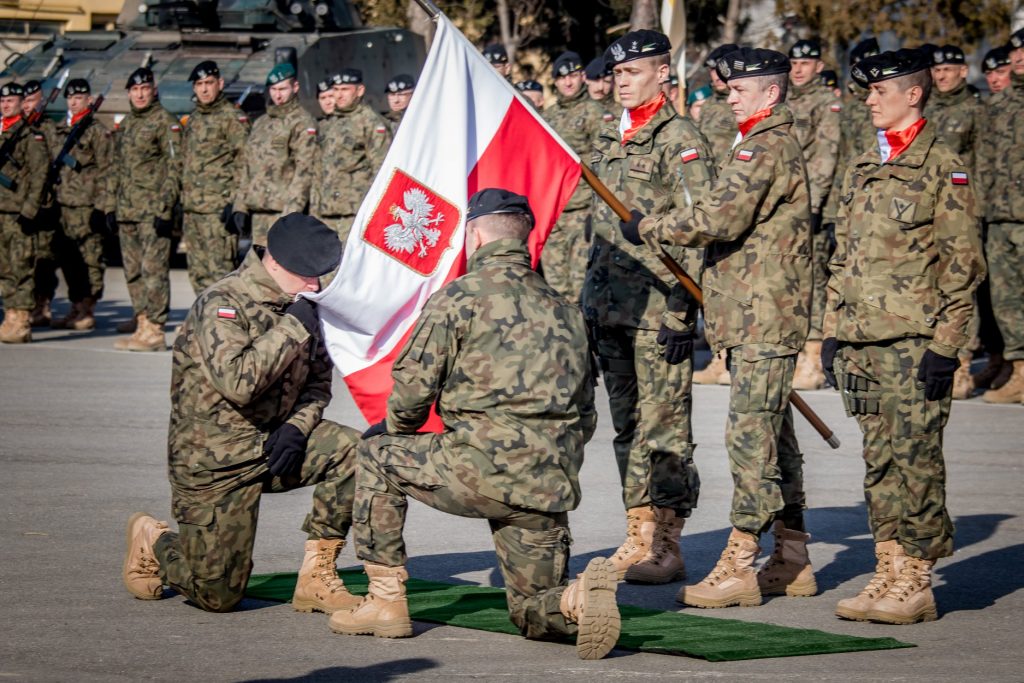
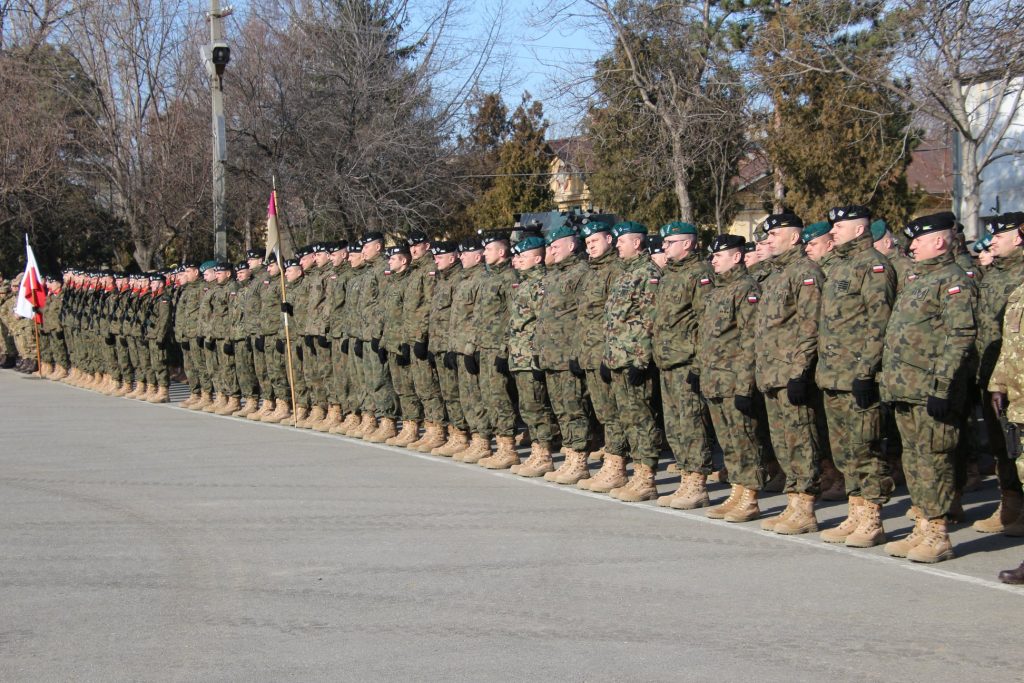
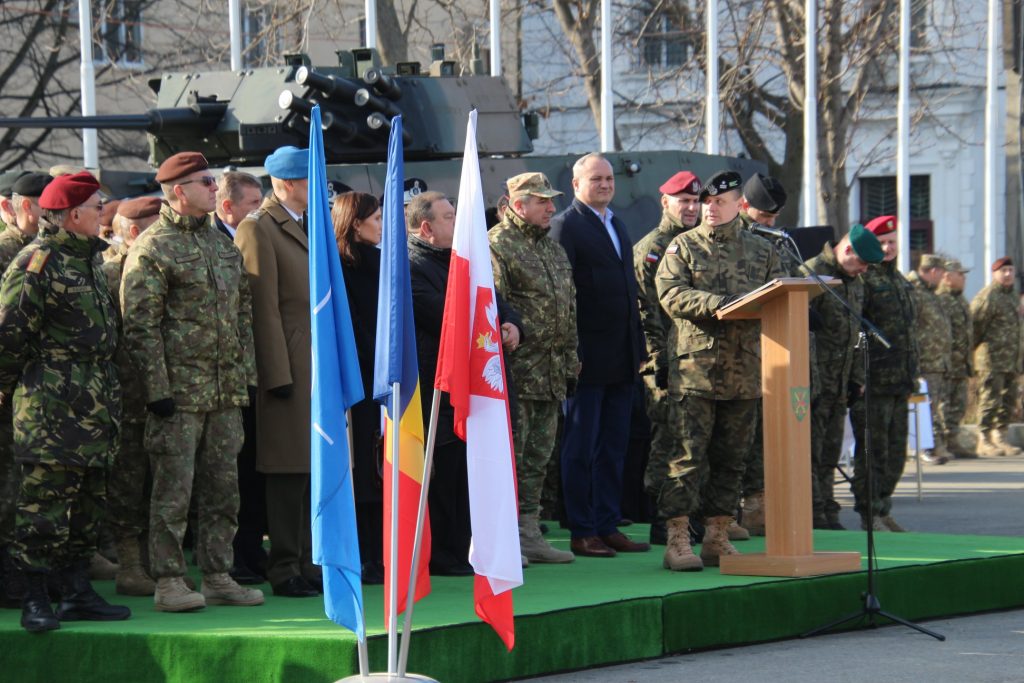
Wednesday, 22 January, from 12.00, at the headquarters of the 26 Infantry “Neagoe Basarab”, from Craiova, the ceremony took place on the occasion of the transfer of authority of the polish military contingent , 5th and 6th rotations of the polish contingents as a part of the Multinational Brigade South-East , that will be deployed to Romania for about six months.

Polish contingent is part of a joint initiative, whose mission is to help provide forward presence in South-East adapted Alliance. Poland participates with a contingent of 225 military and 47 technical means in the composition of the Battalion 26 Infantry “Neagoe Basarab” within the South-East Multinational Brigade, thus materializing the commitments made by Romania and Poland at the NATO Summit in Warsaw.

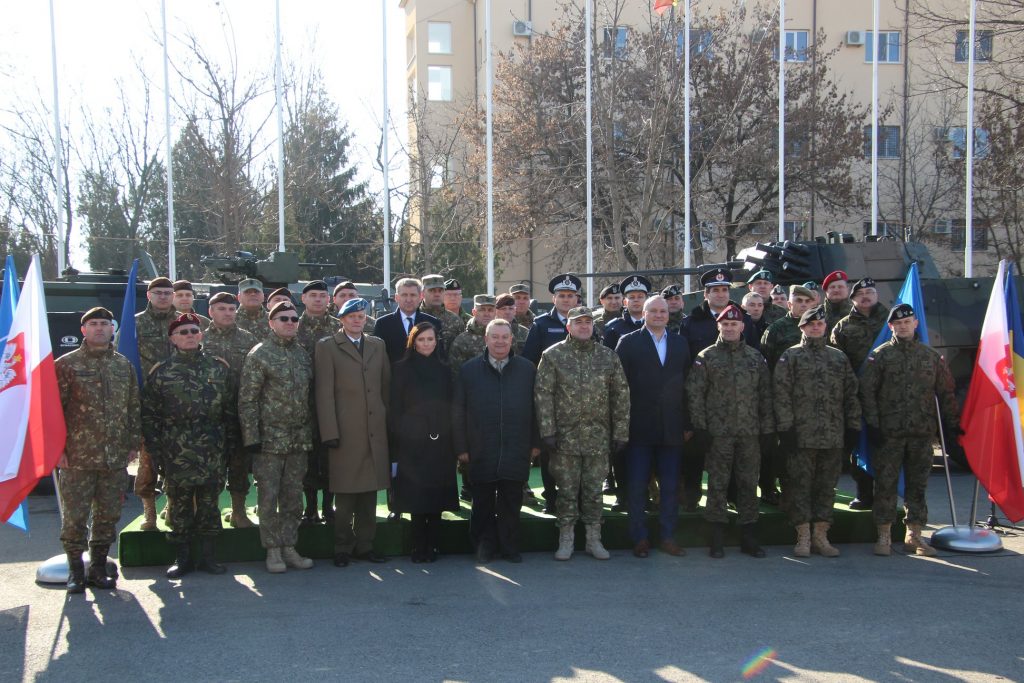
Officials from the Ministry of National Defense participate at this event, representatives of the Operational Command of the Polish Armed Forces, representatives of polish diplomacy, Mrs Magdalena Szuber Zasacka, as Chargée d'Affaires at the Embassy of Poland in Bucharest, consul of the Polish Republic in Brasov, Mr Janusz Szaliński, the military attaché of the polish embassy, Mr Colonel Jerzy Jankowski well as representatives of local government and county.


1 December-National Day of Romania

Bucharest will be in the spotlight for the National Day , but in the whole country are taken place 660 of events celebrating 101 years since the Transylvanian Union with Romania in the year 1918.

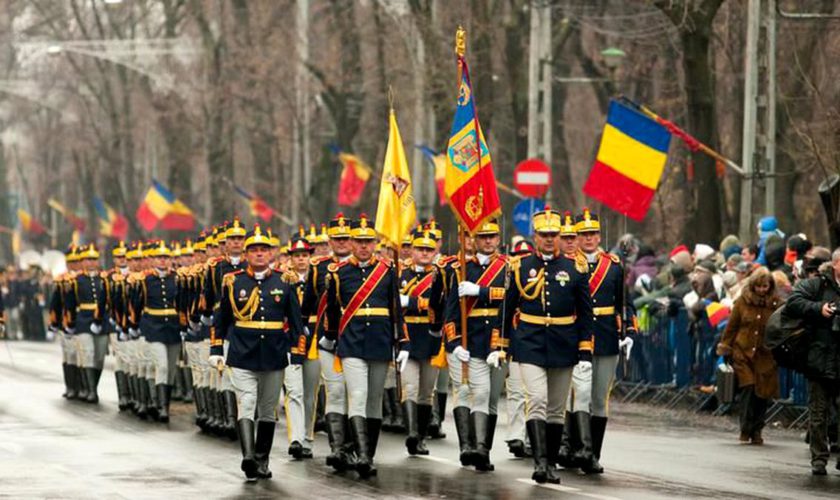
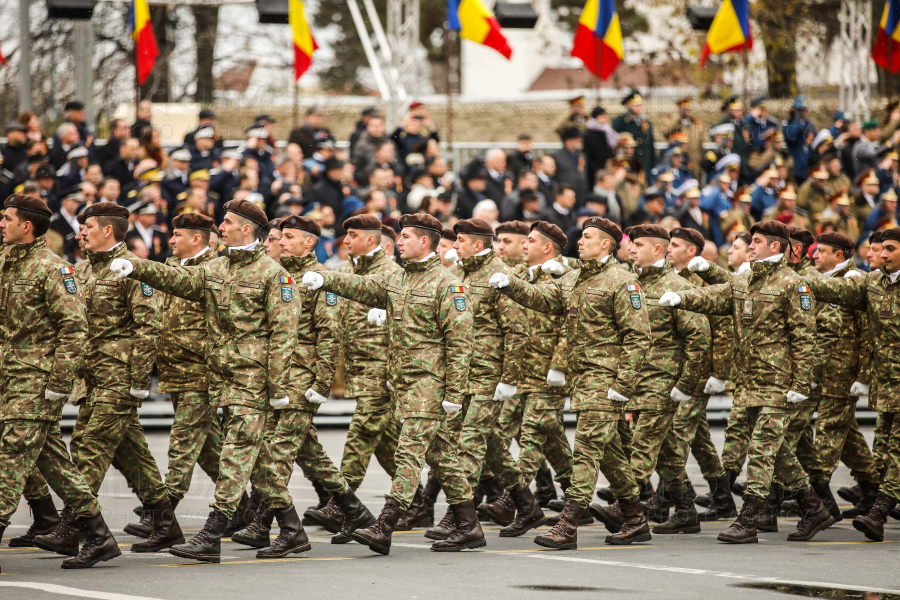
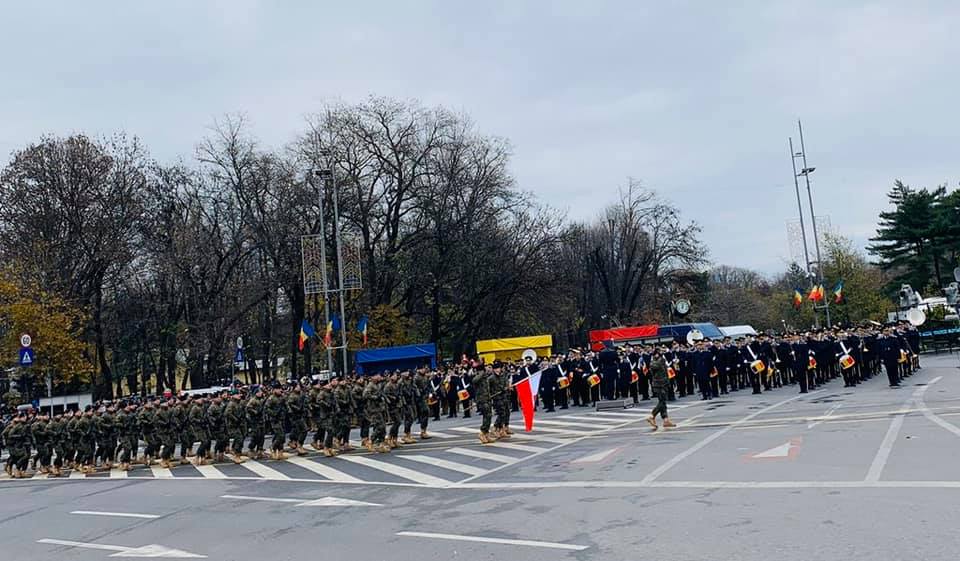
Official, military parade 1 December starts in Bucharest around 11.00. Approximate 4.000 soldiers and specialists from the Ministry of National Defense, Ministry of Interior, Romanian Intelligence Service and the National Administration of Penitentiaries, with them will be hundreds of military 21 allied and partner countries, approximate 200 of technical means and above 50 aircraft, will be at the military parade on 1 December in Bucharest.

At the military parade organized in the capital the officers will march under the Arch of Triumph, agents and non-commissioned officers of the Police, County Police, General Inspectorate for Emergency Situations, Border Police, but also students of the Police Academy “Alexandru Ioan Cuza”.

Foreign military detachments that will participate in the parade, will be from Poland, Canada, Czech Republic, Croatia, but also representative of France, Germany, Georgia, Greece, Italy, Lithuania, Latvia, Luxembourg, Macedonia de Nord, Republic of Moldova, Montenegro, Portugal, Slovenia, Bulgaria, Turkey, Ukraine and USA.

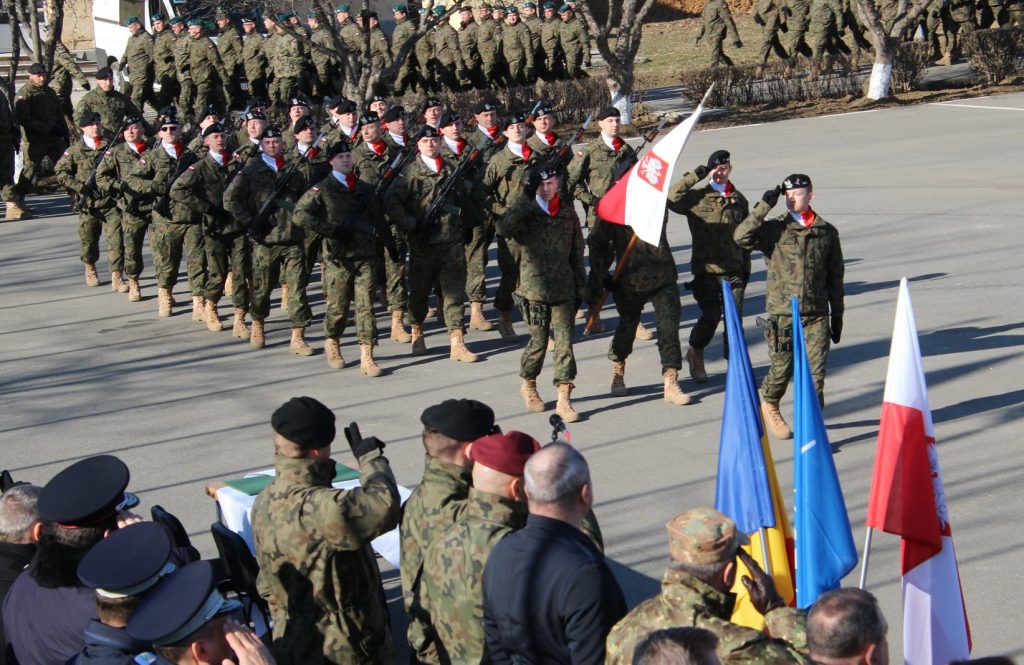
The largest number of foreign military(75) at the National Military Parade was the polish military detachments deployed in Romania, controlled by Jacek Ćwięka.

This image alt attribute is empty; filename is pic_n.jpg

The polish military deployed in Romania, as part of the Multinational Brigade South East from Craiova, it consists of 230 military. Most of the polish military contingent is generated by Brigade 17 mechanized from Poland, who served missions in the Persian Gulf and Afghanistan, into the period 2007- 2014.

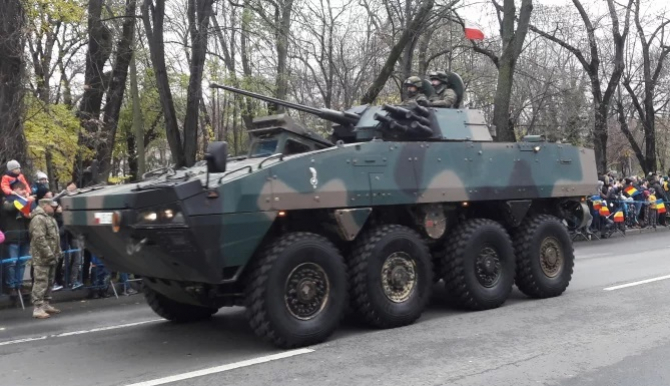
Brigade 17 mechanized is one of the largest units in Poland, being equipped with the latest combat equipment of the army of this state. The main technical means of the Polish Military contingent are the Rosomak 8X8 troop carriers, in several versions. The main model infantry fighting vehicle is equipped with a cannon caliber Bushmaster 30 mm. Also, within the military technique parade, the polish military marched with the ROSOMAK troop transporters.

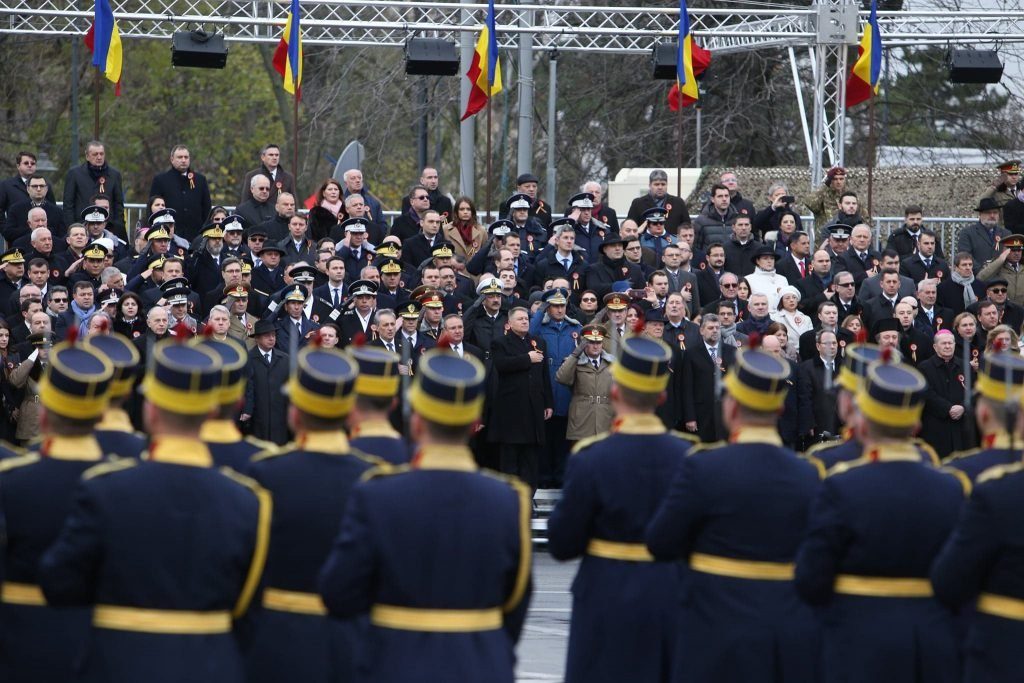
At the military parade assists Romanian President, Klaus Iohannis, Presidents of the Senate and Parliament, Teodor Melescanu, respectively Marcel Ciolacu, together with members of the Government, as Minister of Internal Affairs, Marcel Vela, Foreign Minister, Bogdan Aurescu, Minister of Justice, Catalin Predoiu, Minister of Finance, Florin Cîţu. Also, are present NATO Deputy Secretary General, Mircea Geoană, heads of institutions, representatives diplomats and religious cults , politicians, veterans.

Therewith, after the end of the military and technical parade, the public can visit, till 14:00, exhibitions of military technique that will be located in the area of ​​the Free Press Market and the area of ​​the Infantry Monument (B-dul Kiseleff).

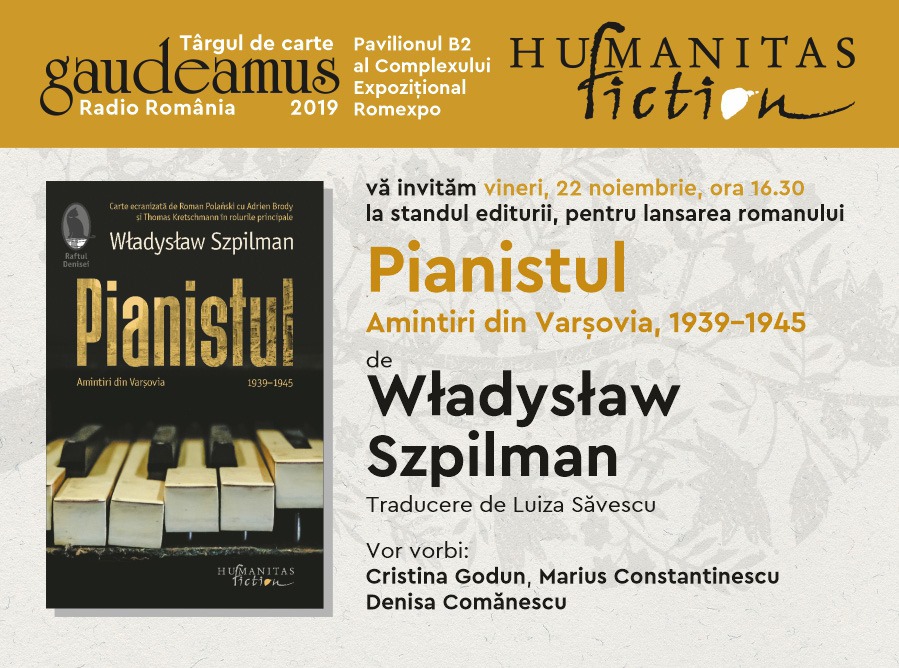
Launch of the book “ The Pianist”

On 22-24 November, at the Gaudeamus book fair 2019, will launch the book “ The Pianist” whose author is the polish pianist and composer Władysław Szpliman. Translation by Luiza Săvescu.

On 23 September 1939, a young jewish pianist plays live on the radio in Warsaw-Nocturna in D minor by Chopin. Music stops abruptly, with the first explosions of the german bombs launched on Poland. That's how it starts the death of a city and the human tragedy that has marked two centuries already. After six years, music starts again: the same Nocturna, playing an out of tone piano, manages to save a man's life, which carries the burden of memory of others .

Originally published in Poland, in 1945, then banned by the communist authorities, the memories of the jewish pianist Wladyslaw Szpilman, documents of his miraculous survival in the Warsaw ghetto, remain one of the most shocking evocations of the Holocaust. In a traumatic microcosm, on which the spectrum of the concentration camp is uninterrupted, the pianist is kept alive, by a strange twist of destiny and the supreme irony, by a meloman german captain.

Based on this exceptional story about the Second World War, in the year 2002, Roman Polański made the film of the same name, winning three Oscars (scenario, director and best actor) and with Palmes d 'Or in Cannes.

Honorary Consulate of the Republic of Poland in Cluj-Napoca

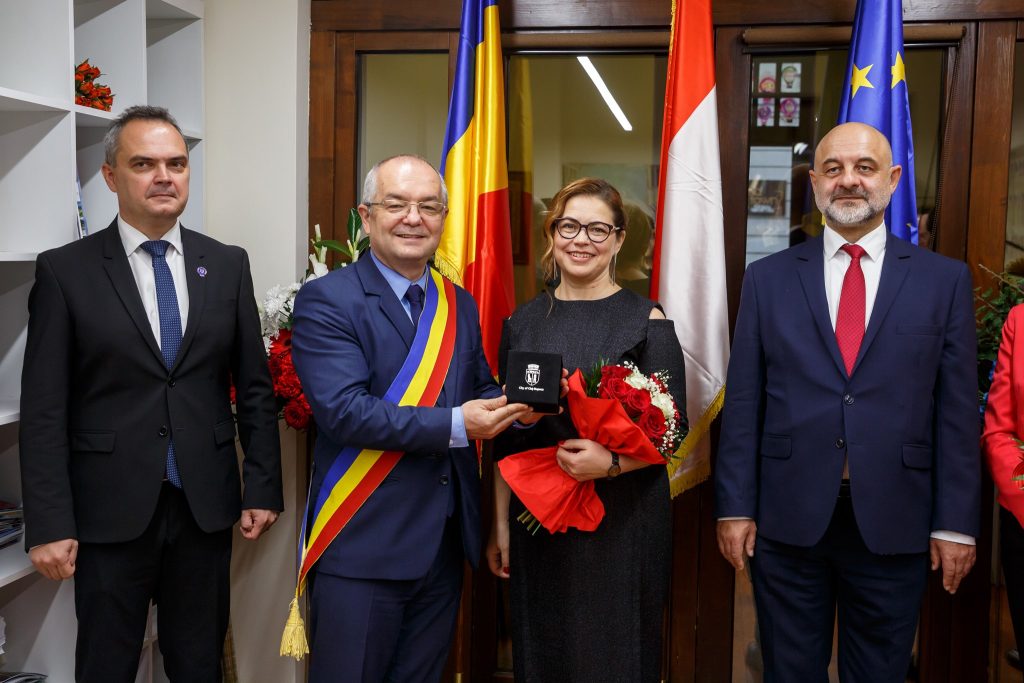
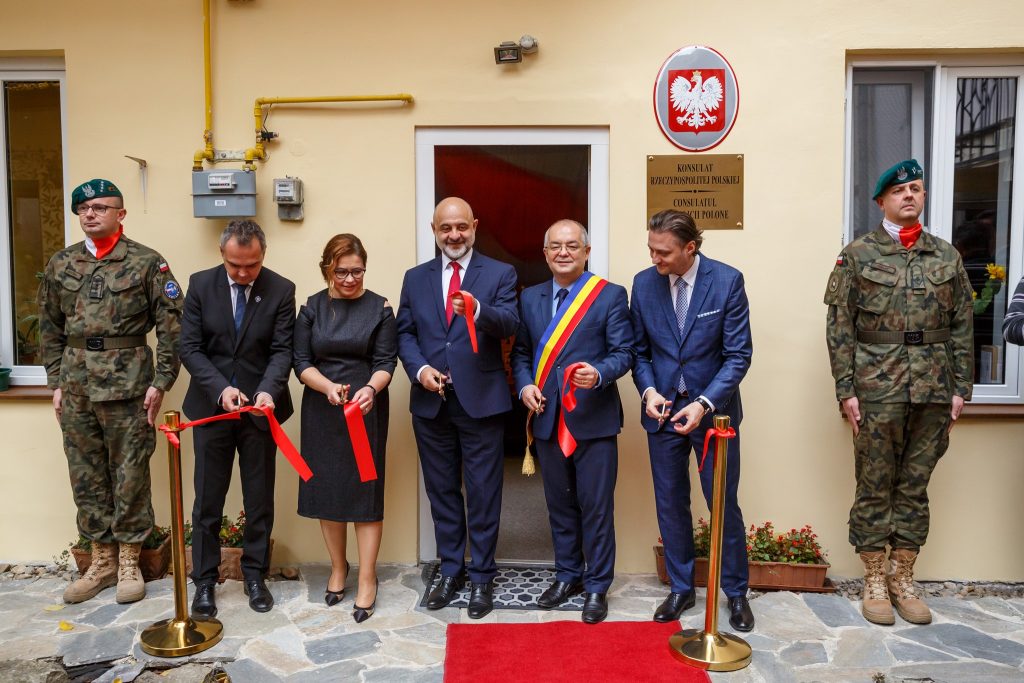
On 13 November 2019, Consulate of Poland in Cluj-Napoca officially started to work. Consulate will be headed by Honorary Consul Mihaela Monica Căluşer and will cover 7 counties: Bihor, Bistrița-Năsăud, Cluj, Maramureș, Mureș, Sălaj și Satu Mare.

Consulate in Cluj was inaugurated in the presence of Secretary of State of Foreign Affairs of Poland, Maciej Lang, Andrzej Kalinowski, Consul of Poland in Romania, John Cherecheş, prefect of Cluj county, Emil Radu Moldovan, the president of the Bistrița-Năsăud County Council, representatives of local and regional institutions in the counties of the consular district, and personalities from the business and cultural life.

The inauguration of the Consulate was accompanied by a classical music concert at the National Opera in Cluj-Napoca, prepared in collaboration with the Culture Anime Foundation in Warsaw and the Young Famous Orchestra in Cluj-Napoca. At Opera House, it was presented the exhibition “About Poland”, prepared by the Department of Public and Cultural Diplomacy Ministry of Foreign Affairs of Poland.

Address of the Consulate of the Polish Republic in Cluj-Napoca:

Str . Republicii, No. 10, Cluj-Napoca, Cluj County

 Emergency telephone number : (0040) 722 466 433

Email: konsulat.clujnapoca@gmail.com

11 November-Independence Day in Poland

On 11 November, Poland celebrates its Independence Day, national celebration which marks Poland's regained independence in the year 1918 after 123 years which was divided by Austria-Hungary, Prussia and Russia.

Independence Day is celebrated with military parades, religious services, various cultural and social events and especially through the reunion of families and loved ones.

In the history of 20th century Poland, there is no more important personality than Marshal Józef Piłsudski. (1867-1935). The renowned commander became the symbol of the return of Poland's independence in the year 1918, when, after 123 years of annexation, of division of the polish territories between Russia, Prussia and Austria, who seized them three times and tried to deprive the poles not only of their homeland, but also the language, their traditions and culture, country back on the European map. Also, Pilsudski had a decisive role in the configuration of Poland after World War.

Enjoying great appreciation internationally, the leader was at the forefront of the reborn polish state, established army and created its democratic foundations (e.g, in November 1918 recognized women's right to vote). Subsequent he ruled with an strong hand, not once raising controversy, and admiration even among his opponents.

Jozef Pilsudski, it was a friend of the royal family of Romania, has been in Romania on long vacations, and four times on official visits (1922, 1928, 1931, 1932).

Also, it had special merits for the whole continent, in the year 1920, winning the Battle for Warsaw, known in Poland as the "Miracle on the Vistula", defended his own country but also defended Europe against the Bolsheviks for decades.

Polish Film Festival CinePOLSKA

The 15th Polish Film Festival CinePOLSKA edition from Bucharest will take place between 29 October to 3rd November 2019 .

During the musical opening of the CinePOLSKA festival on 29 October 2019, Control Club, you can listen to the work of the polish composer, pioneer of modern jazz Krzysztof „Komeda” Trzciński (1931-1969), the author of the soundtrack for many of Roman Polański's films, among others for "Rosemary's Baby" („Dziecko Rosemary”) and ''Water knife" („Nóż w wodzie”).

The compositions of the musician are the subject of the latest program, entitled "Komeda", the famous polish jazz quintet Quintet Wojtek Mazolewski (WMQ), is known for its unique scenic energy.

The film screenings of the Jubilee edition of CinePOLSKA will start on 30 October 2019, at Cinema Elvire Popesco, with the romanian premiere of Agnieszka Holland's latest film "Mr. Jones".

Holland tells the extremely current story, based on real events, a welsh journalist Gareth Jones, who is fighting for the truth during the Stalinist regime and the Great Famine in Ukraine. In the age of the false news of care does not invade a traditional media crisis, the message of film is extremely strong and current.

The Polish director's film had its premiere at the Festival Berlin movie from this year, in September 2019 that won the Golden Lion, great award the most important festival in Poland – Film Festival Polish Fantasy in Gdynia and is among the films nominated European Film Academy Awards 2019, whose winners will be announced on 7 December.

At the CinePOLSKA festival, viewers will see the most interesting polish films produced in the last six months (all with romanian and english subtitles), awarded at festivals international, such as Sundance and Cannes.

FESTIVAL PROGRAM:

29.10.2019, from 20.00 – Club Control – concert WOJTEK MAZOLEWSKI QUINTET

30.10.2019, from 20.00 – official opening: MR JONES / Obywatel Jones (regia Agnieszka Holland). The film is spoken in english and will have romanian subtitles. It will not be subtitled in polish language.

31.10.2019, from 20.30 – PLAY WITH LIFE / Zabawa zabawa (regia King Dębska). Film in polish, subtitled in romanian and english.

1.11.2019, from 18.30 – DOLCE FINE GIORNATA / Słodki koniec dnia (regia Jacek Borcuch). The film is spoken mostly in italian and will have romanian and english subtitles. It will not be subtitled in polish language.

2.11.2019, from 18.30 – JULIUSZ (regia Alexander Pietrzak). Film in polish, subtitled in romanian and english.

2.11.2019, from 20.30 – CLERUL (regia Wojciech Smarzowski). Film in polish, subtitled in romanian and english.

3.11.2019, from 20.30 – ESCAPE (regia Agnieszka Smoczyńska). Film in polish, subtitled in romanian and english.

Learn Polish in Romania

At the moment, in Romania, Polish can be studied in the cities of Bucharest, Cluj, Iasi, Craiova, Suceava.

Bucharest -The University of Bucharest, Faculty of Foreign Languages ​​and Literatures, Department of Slavic Languages ​​and Literatures, str. Pitar Mos No. 7-13, tel.: 021 313 88 75.

Polish Institute in Bucharest, in collaboration with the Department of Slavic Languages ​​and Literatures, University of Bucharest, organizes a polish language course held by Mrs. Justyna Szczepaniak. The course takes place during the academic year, afternoon and further information can be obtained by phone 021 22 44 556, email:bucharest[at]instytutpolski.org

Cluj-Napoca – University “Babes-Bolyai”, Faculty of Philology, Department of Slavic Philology, str. Theodor Mihali No. 58-60, tel.: 0264 418 652

The Polish Language and Culture Center in Cluj organizes an additional polish language and literature lecturer dedicated to the students of Babeş-Bolyai University, from all faculties and specializations. It is a beginner lecturer. Polish Language and Culture Center: str. Moti No. 11, and. 4, room 400, 401, tel.: 0264 418 655, int. 5863, email: polska.cluj[at]yahoo.com.

Iasi – University “Alexandru Ioan Cuza”, Faculty of Letters, Slavic Language and Literature “Peter Caraman”, Polish Language Lecturer, Carol I Blvd.. 11, tel.: 0232 201 052, email: lectoratpolonezuaic[at]gmail.com

Craiova – University of Craiova, Polish Language and Culture Center Craiova, University Library, str. technology, Lapus district, email: clcp_craiova[at]yahoo.com.

Courses also organize the Union of Poles from Romania Dom Polski - Suceava and Bucharest. Detailed information can be found at web address: www.dompolski.ro.

Find out more about Poland

  • Poland is the 9th European country size.
  • Country name comes from the "Polana" which means "people who live in the open field".
  • Poland had several capitals over time. Gniezno, Poznan, Krakow and Warsaw are the most popular, the latter being the current capital.
  • Poland is considered part of Europe East due to the communist past, but, geographically, country is in the center of Europe.
  • The first documented leader of Poland was Mieszko, in the 10th century.
  • Polish King Kazimierz Jagiellonczyk was known as the "Father of Europe" after all 9 his children became important people. One of them became cardinal, other 4 became kings, one child was canonized, and his three daughters were married and became mothers heirs to the thrones of the greatest dynasties in Western Europe.
  • In 1 September 1939, Germany invaded Poland without declaring war before to them. This was the starting point for the Second World War.
  • The most famous polish person was Pope John Paul II.
  • In some parts of Poland, name day is considered more important than the day of birth.
  • Nikolaus Copiernicus, polish astronomer, it was the first to suggest that the Earth is not the center of the universe, as was previously thought.
  • Most winners of the title "The strongest man in the world" are from Poland.
  • If we were to count all Nobel prizes obtained by the polish people , I counted a total of 17 Nobel prizes, including 4 peace and 5 literature.
  • Marie Curie was born in Poland. She moved to Paris, where she was married Pierre Curie and together they discovered polonium (PO) named after her homeland mother and radium (OUT).
  • The poles have a tradition that, at the beginning of winter they weave straw dolls and decorate them with different ribbons. These dolls represent winter, so, at the end of season, when snow begins to melt, people burn them and throw them into a river, to symbolize the "death" of the cold season. This tradition is called Marzanna.
  • The most common dog name in Poland is "Burek”. The same word is used to determine the color brown-gray.
  • In Poland is the only prehistoric forest from Central Europe, Bialowieza forest located since 1979 in patrimonial UNESCO. Here the central Nordic region is the most protected and any kind of human activity is strictly prohibited.In this forest lives the last specimens of wild bison (2000 copies of the nearly 3000 existing on earth ).
  • The oldest text in polish literature dating from century 14 and is a hymn to the Virgin Mary .